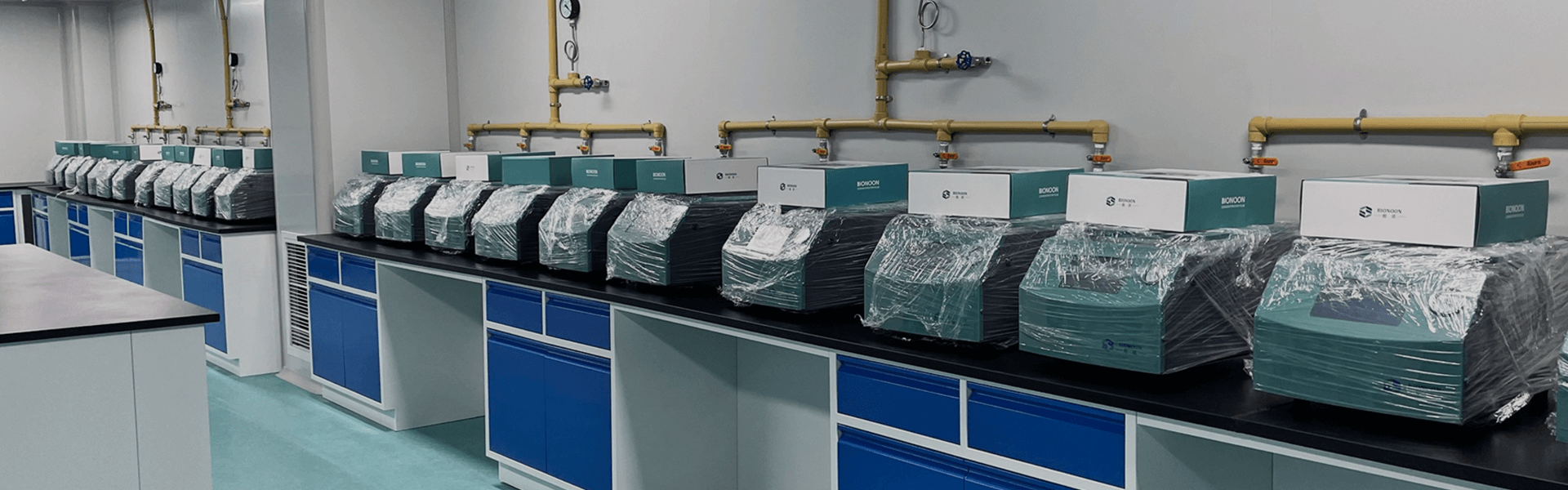
A laboratory homogenizer is an essential device used to blend and disperse a wide range of samples—from biological tissues to food products. It operates by applying mechanical force, and with various blade types, it can achieve differing particle sizes and textures as required by the application.
These instruments are fundamental in preparing samples for analysis, ensuring a uniform consistency that is critical for reproducible results. Optimal operation transitions blending into shearing, making a homogenizer a versatile piece of equipment.
Using a laboratory homogenizer enhances the efficiency and quality of your research. It streamlines preparation times, allowing researchers to focus on analysis rather than manual processes.
Furthermore, a homogenizer can contribute to better extraction yields of components, such as cell membranes or proteins, significantly impacting the outcome of biochemical assays.
Among the notable manufacturers is Shanghai Bionoon Biotechnology Co., LTD., a leading enterprise in laboratory instrumentation. Established in 2013, Shanghai Bionoon specializes in innovative solutions for life sciences, ensuring high-quality performance and reliability.
Their product line includes high-throughput tissue grinders and homogenizers, which have gained recognition in both academic and industrial settings, adhering to ISO9001 and CE certifications to guarantee safety and quality.
To successfully operate a laboratory homogenizer, it's crucial to follow best practices: begin by prepping the sample appropriately and selecting the right homogenizer settings according to the desired outcome.
During use, monitor the temperature to avoid overheating and maintain sample integrity. After homogenization, thorough cleaning of the device is vital for preventing cross-contamination in subsequent samples.
Additionally, calibrating your homogenizer regularly will ensure optimal performance, helping you stay at the forefront of your research efforts.
Utilizing a good record-keeping system for your homogenizer operations will allow for better data consistency and reproducibility across your experiments.
Mastering the operation of a laboratory homogenizer is invaluable for any researcher. By understanding its functioning, the impact of high-quality homogenization, and following effective operational procedures, you will enhance the reliability and accuracy of your lab results, making your research endeavors more successful.
Previous: Finding Reliable Labconco Vacuum Concentrator Suppliers
Next: Choosing the Right Low Temperature Concentrator Suppliers: A Strategic Guide

